
Walk through any grocery store and you’ll see foods labeled:
- High Protein
- Keto-Friendly
- Low Carb
- Gluten Free
- Natural
- Heart Healthy
But marketing doesn’t always equal nourishment.
This is called greenwashing—when foods are packaged and promoted to appear healthier than they actually are.
Many products are designed to catch your attention with trendy wellness language, even when the ingredients and nutrition facts tell a different story.
The goal isn’t fear around food.
It’s learning how to look beyond the front label and make more informed choices.
What Greenwashing Looks Like
Example #1: “Protein” Oatmeal
A package may say Protein Oatmeal in large letters, but when you turn it over:
- 38g carbohydrates
- 13g protein
- Added starches, sugars, or fillers
In the picture below- sugar is the second ingredient. Ingredients are listed by largest quantity in the product. So the majority of this product is whole grain oats, then sugar for something that is called Protein Oats and marketed as a healthy high protein option.
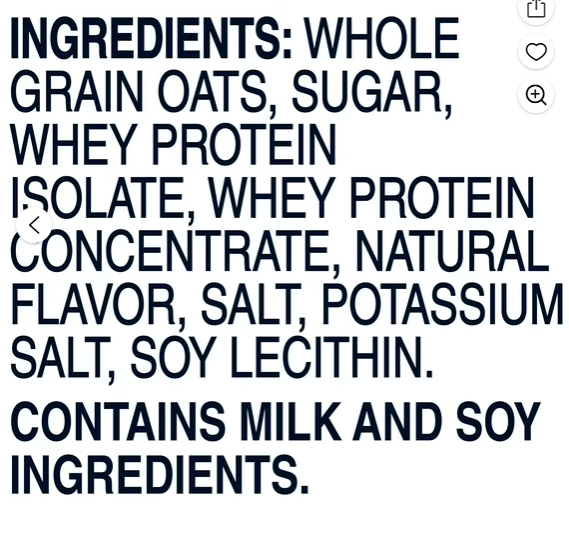
Compared to:
- ½ cup plain rolled oats = around 27g carbs and 5g protein
Yes, the protein oatmeal contains more protein—but it may also contain more processed ingredients and significantly more starches than regular oats.
The front label highlights the positive feature while distracting from the full picture.
Keto Bread & Low Carb Tortillas
Many keto breads and low-carb tortillas are heavily processed and made with:
- Modified starches
- Isolated fibers
- Seed oils (highly inflammatory and can disrupt the balance between Omega 3 and Omega 6)
- Gums and additives
- Resistant starches
Even if the label says:
- “Net 2 carbs”
- “Keto approved”
- “High fiber”
…the ingredient list may look more like a chemistry experiment than food.
Your body recognizes and processes whole foods differently than highly engineered products.
How to Read Labels More Intuitively
Step 1: Ignore the Front of the Package
The front is marketing.
The back is information.
Always look at:
- Ingredients
- Protein
- Carbohydrates
- Fats
- Added sugars
Step 2: Read the Ingredient List
Ask yourself:
“Does this sound like real food?”
Example:
- Oats
- Potatoes
- Eggs
These are recognizable ingredients your body understands.
Now compare that to:
- Modified wheat starch
- Cellulose gum
- Resistant dextrin
- Soy protein isolate
More processed foods often require more work for digestion because they’re farther removed from their original form.
Step 3: Compare the Macros to the Claim
If something says:
“High Protein”
Ask:
- Is the protein actually high compared to the carbs?
- Would adding Greek yogurt or eggs to a regular version accomplish the same thing more simply?
If something says:
“Low Carb”
Ask:
- Is it naturally low carb?
- Or was it engineered to become low carb through processing and additives?
A Simpler Approach
This doesn’t mean you can never eat processed foods.
It means learning to:
- Pause before believing the marketing
- Read labels with awareness
- Prioritize foods your body easily recognizes and digests most of the time
Often, simpler foods with fewer ingredients can:
- Feel more satisfying
- Support digestion better
- Reduce inflammation triggers
- Help you feel more in tune with your hunger and energy
Key Reminder
A wellness label doesn’t automatically make a food nourishing.
The goal isn’t perfection—it’s awareness.
When in doubt:
- Read the ingredients
- Compare the macros
- Ask yourself:
“Would my body recognize this as food?”
Simple awareness goes a long way. 🤍