
When an injury has been hanging around for months, the problem is often bigger than simply “rest it a little longer.” The area may need the right kind of stimulus, followed by a realistic plan for how to load it again. Focused shockwave therapy is one tool we can use to help selected patients move that process forward.
What focused shockwave therapy does
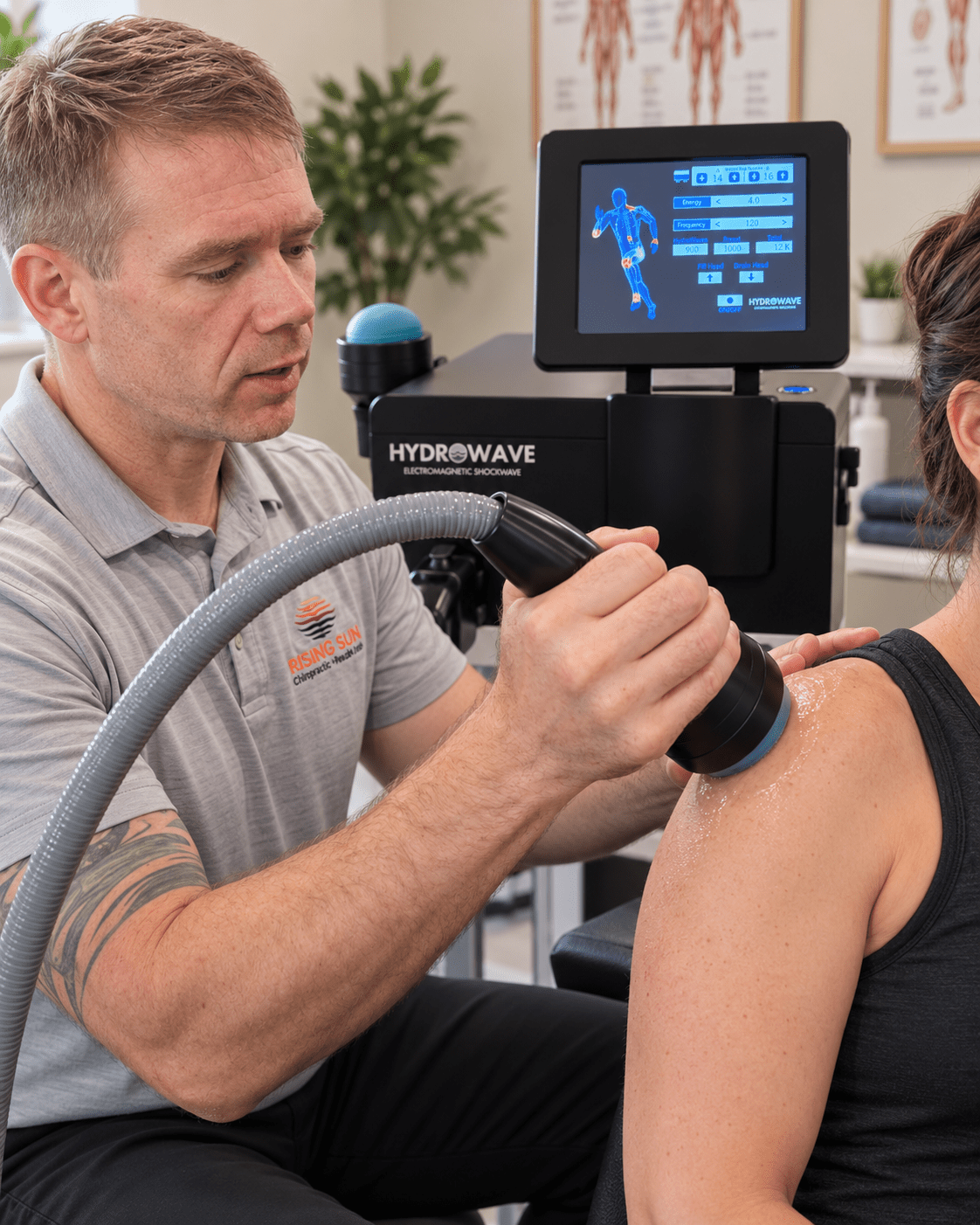
Focused shockwave sends acoustic energy to a specific depth and area. That mechanical stimulus may influence pain, circulation, and the way the tissue responds to loading. It is not a magic reset button, and it does not replace a good examination. It gives us another way to work with stubborn tendon, joint, soft-tissue, and certain nerve-related problems when the case is a good fit.
Why some problems seem to get stuck
Healing is not just about avoiding activity. Your body also needs the right amount of challenge at the right time. Too much load can keep an area irritated, while too little can leave it poorly prepared for the things you need and want to do. Smoking, circulation, sensation, sleep, nutrition, inflammation, prior surgery, and the length of time you have had the problem can all change the plan.
That is why we do not start with a preset number of sessions. We begin by figuring out what is actually limiting you and how much stimulus your body appears ready to handle.
What is the difference between focused and radial treatment?
Focused shockwave is designed to place energy at a chosen depth. Radial pressure-wave treatment spreads more broadly and is strongest closer to the surface. Both are often called “shockwave” in everyday conversation, but they are not identical. The difference matters when we are deciding which tissue we are trying to reach and how precisely we want to treat it.
What problems may be considered?
We may consider focused shockwave for chronic tendon problems, plantar heel pain, calcific tendon conditions, selected spinal and paraspinal problems, shoulder and knee conditions, joint or bursitis-type presentations, and some cases involving peripheral neuropathy or impaired circulation in the lower arms or legs. Being on that list does not automatically mean the treatment is right for you. Similar symptoms can come from very different problems.
What does a visit feel like?
The treatment itself will often take about 10 to 12 minutes. You will usually feel repeated tapping or pulsing in the area. We adjust the treatment to the location, your sensitivity, the tissue involved, and how you respond. Stronger is not automatically better.
Shockwave is part of a plan
Some people may use shockwave as a stand-alone service. In many cases we will recommend combining it with rehabilitation, chiropractic care, Class IV laser therapy, or changes to how you are loading the area. The point is not to pile on services. It is to use the combination that makes sense for your goals and your examination.
Start with an examination
Before recommending treatment, we need to rule out reasons shockwave should be avoided or modified and make sure we are treating the right problem. If it looks like your tissue would respond better to a gentler approach, laser therapy may be the better place to start.
Learn more about focused shockwave therapy at Rising Sun.
Start with a $49 Shockwave Mapping Session
Your introductory visit includes a focused examination, treatment-area mapping, an initial HydroWave treatment, and a report of your test findings with treatment-plan recommendations. We review any recommended additional care and its total cost before you decide whether to continue.
Schedule your Shockwave Mapping Session or call 507-934-3333 if you need help choosing the appointment.
This information is educational and is not a diagnosis or a promise of results. Treatment recommendations are based on an individual examination.