
Stiff Neck vs Pinched Nerve: How to Tell What’s Actually Going On
“Is This a Pinched Nerve?”
When neck pain hits hard, this is almost always the first thought.
It makes sense.
The pain is sharp, your movement feels blocked, and it came out of nowhere. So your brain goes straight to:
“Something must be pinched.”
But most of the time, what you’re feeling isn’t a pinched nerve—it’s a neck that’s temporarily locked up. When you have “acute torticollis” pain is intense, limiting and feels like it’s really serious. Nerve and disc pain is different, we are going to make sure you can get through this and know the difference.
What a Stiff or “Locked” Neck Really Is
When your neck feels stuck, it’s usually a combination of a joint not moving well and your muscles stepping in to protect it.
That’s why it feels like:
- something is caught
- your head won’t turn one direction
- one side feels tight and the other feels stretched
It’s not that your body can’t move.
It’s that your body has decided it shouldn’t move that way right now.
If you want a deeper breakdown of why that happens, this ties directly into what we explained here:
→ Severe Stiff Neck: Why Your Neck Gets “Stuck” and What to Do About It
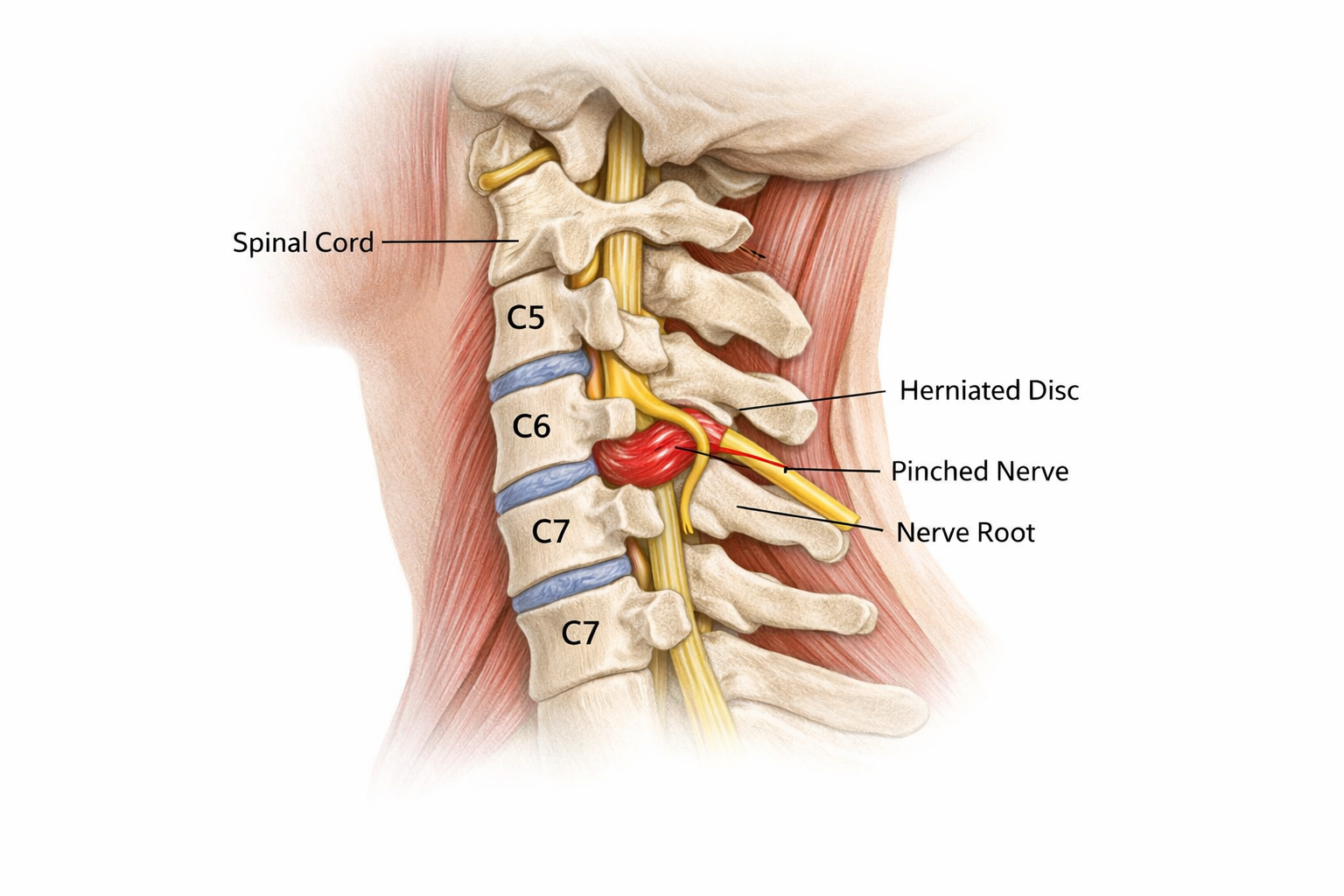
What a Pinched Nerve Actually Feels Like
A nerve problem behaves differently.
Instead of just being stuck in the neck, symptoms tend to travel.
People usually notice:
- pain moving into the shoulder or arm
- tingling or numbness
- a burning or electric-type feeling
- sometimes weakness in the arm or hand
It’s less about being locked and more about how your symptoms are behaving.
Why These Get Confused So Often
Because a severe stiff neck can feel dramatic.
The pain is sharp. Movement is limited. It can stop you in your tracks.
So it feels like something serious must be happening.
But most of the time, it’s a mechanical issue—your joints and muscles reacting—not a nerve being compressed.
A Simpler Way to Look at It
Instead of trying to diagnose yourself, pay attention to patterns.
If everything stays in your neck, is sharp with neck movement and doesn’t spread or move around it is usually “torticollis”
If you have some range of motion in your neck but in some positions symptoms travel into or down the arm, seem to come and go in intensity, are worse after activity or spreads with use, that leans more toward nerve involvement.
What You Should Do Right Now
Regardless of which one it is, the early approach is actually similar.
You don’t need to force anything.
Start with:
- gentle movement
- avoiding aggressive stretching
- staying active without pushing into sharp pain
If this is a stiff neck, those small movements are often what start to unlock it.
If stretching has been making things worse, this explains why:
→ Why Stretching a Stiff Neck Can Make It Worse
When It’s Time to Get a Second Set of Eyes
You don’t need to panic, but there are a few signs that shouldn’t be ignored.
If symptoms are traveling down your arm, or you’re noticing numbness or weakness, get it looked at. Most disc and nerve injuries respond much faster with specific treatment and guided home care. These can be serious and most people want to avoid injections and surgeries. Disc injuries can heal!
If you are having limiting range of motion, sharp pain and it’s lasting more than 2-3 days, get it checked out. .
The Takeaway
Most people jump straight to “pinched nerve” because the pain feels intense.
But in reality, a lot of these cases are your body protecting a joint that got irritated.
It feels serious.
But more often than not, it’s something that settles once the system calms down.